
A well-fitted navy or charcoal suit, a crisp white shirt, and a clearly visible tie is the safest, most photogenic choice for graduation. Made-to-measure suits and signature ties offer that fit, cut to your own measurements rather than pulled from a rail. Book tailoring or alterations several weeks out. Fit, not fashion, is what carries a graduation photograph.
TL;DR:
Made-to-measure suits ensure a perfect fit for graduation and can be worn afterward, but they require early booking and several weeks of tailoring.
Navy or charcoal are the most versatile suit colours, with textured weaves preferred, and should be paired with a white or pale shirt and dark shoes.
A well-fitting jacket, collar, and sleeve length are critical, with shoulder seams at the shoulder bone and about 1.5 cm of shirt cuff visible.
Under the gown, a crisp white shirt and polished shoes are essential, and a jacket adds structure that flatters the silhouette in photos.
Accessories like cufflinks, a simple pocket square, and a slim watch finish the outfit without overspending or distraction.
Table of Contents
Which graduation suit and tie suit you best?
Choosing a graduation suit is really about choosing what shows under the gown and how it photographs from a stage twenty feet away. A collection built around that brief includes pieces that map onto three common graduation needs.
The Four-Piece Tailored Suit is the made-to-measure route for graduates who want a suit that fits properly on the day and earns its keep afterwards, at interviews, weddings, or your first proper job. Because it is cut to individual measurements rather than adjusted from stock sizing, the shoulder line sits correctly and the sleeve length stops exactly where it should, two details that make or break how a suit reads in photographs. Pair it with a white or pale blue shirt and dark oxford shoes for the cleanest line under a gown.
The Regent Silver Geometric Tie works best for formal ceremony photography. Its neutral, understated pattern sits well against almost any shirt colour and won’t fight with the gown’s own trim or hood colours, which makes it the safer pick if you’re unsure what your gown looks like until the day itself.
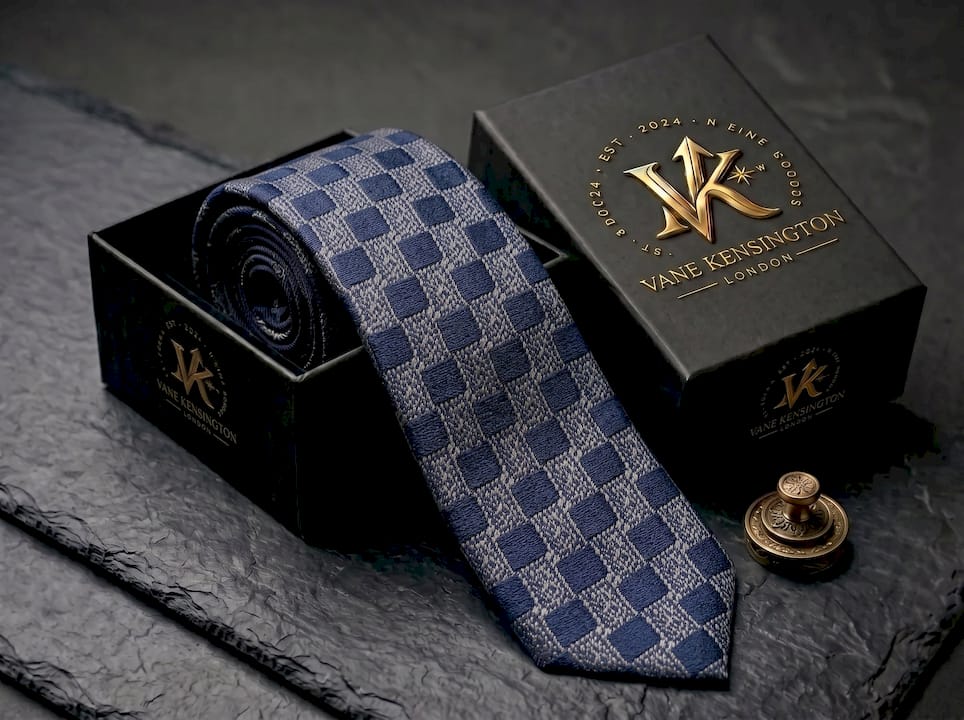
The Crested Regimental Charcoal & Crimson Tie suits graduates who want something with more presence, particularly where school or university colours lean traditional. The regimental stripe reads as formal rather than flashy, so it holds up next to family portraits taken decades from now.
Made-to-measure suits generally need a true fitting followed by several weeks of hand finishing, so order timing matters more than most people expect.
Pro Tip: Order your tie and suit at the same time if you can. Matching the tie’s undertone to the suit’s exact shade is far easier before both arrive than after.
How do you choose the right suit, colour and fabric?
Fit determines whether a suit photographs as sharp or sloppy, colour determines the most versatile results, and timing determines whether either of those things is even possible by ceremony day. Work through these in order.
-
Check the shoulders first. The seam should sit at the edge of your shoulder bone with no divot or bulge. Nothing else matters if this is wrong, and no amount of alteration fixes a jacket bought a size too big.
-
Look at the collar gap. A well-fitted jacket collar sits flush against your shirt collar with no visible gap when you’re standing straight.
-
Confirm sleeve length. Around 1.5cm of shirt cuff should show beyond the jacket sleeve, a small detail that photographs clearly on stage.
-
Choose navy or charcoal as your default. Both photograph reliably and suit almost any gown colour. A textured weave like hopsack or birdseye adds interest without looking loud in a family photo.
-
Switch to light grey or a linen blend for a warm outdoor ceremony. Pure linen creases heavily by mid afternoon; a linen blend gives the same summer look without the same wrinkling.
-
Decide between off-the-peg and made-to-measure based on your timeline and how often you’ll wear it again. Off-the-peg suits your budget and shorter timelines. Made-to-measure suits your fit and long-term wear.
-
Work backwards from your ceremony date. Book a fitting appointment first, then allow time for alterations, then order. Leaving this until the final fortnight is the most common graduation styling mistake.
What should you wear under the gown for the best photos?
Start with the shirt, since it’s the one item guaranteed to show at the collar no matter how the gown falls. A crisp white or pale shirt, dark tailored trousers, and polished black shoes form the most reliably photogenic combination for a graduate, and that holds true whether your ceremony is business-formal or business-casual.
Check your institution’s dress code before assuming a tie is compulsory, since standards range from strict suit-and-tie requirements to more relaxed, tie-optional codes. Where a tie is worn, a symmetrical knot such as the Windsor shows more fabric above the gown’s neckline than a slimmer knot like the Four-in-Hand, which matters when the tie is the only splash of pattern visible on stage. If your collar is narrower, a Half-Windsor or Four-in-Hand sits more naturally.
A jacket under the gown creates a noticeably better silhouette than a shirt alone, giving structure to your shoulders that a gown otherwise flattens.
-
Wear a jacket even in warm weather; gowns hide most of it anyway.
-
Keep trousers at a half break, since full-length hems puddle badly in stage photography.
-
Choose comfortable, broken-in shoes over brand-new ones, since ceremonies involve long stretches of standing and walking to the stage.
-
Press your shirt and trousers the night before, and carry a lint roller for the gown.
One detail worth remembering: because the gown covers most of the suit, the collar and the shoes end up doing most of the visual work in the photographs that actually get printed or shared afterwards.
How does made-to-measure tailoring work for a graduation deadline?
Made-to-measure tailoring starts with a true fitting, where measurements are taken against your own frame rather than a standard size chart. From there, the cloth is cut and the suit is finished by hand over several weeks, a slower process than buying off-the-peg but one that produces a garment built around your shoulders, arm length, and trouser break rather than an average.
That precision earns its keep specifically on graduation day. A gown flattens most of a suit’s shape, so the parts still visible, the shoulder line, the collar, the cuff, need to be exact rather than roughly close. A jacket that sits half a size too large under a gown reads as ill-fitting in every photograph taken from the audience.
-
Book your fitting as soon as your ceremony date is confirmed, not the week before.
-
Expect a first fitting, a period of hand finishing, and typically one further fitting before collection.
-
Build in a buffer week between collection and the ceremony in case final adjustments are needed.
-
Order any accompanying tie at the same time so colours can be checked together, not guessed at separately.
Treat the ceremony date as the fixed point and work every appointment backwards from it.
How do you look after your suit once graduation is over?
Hang your suit on a proper wooden or curved hanger the moment you take it off, never a wire one, since wire hangers push shoulder shape out over time. Let it air for a day before returning it to a wardrobe, ideally in a breathable garment bag rather than sealed plastic, which traps moisture against the wool.
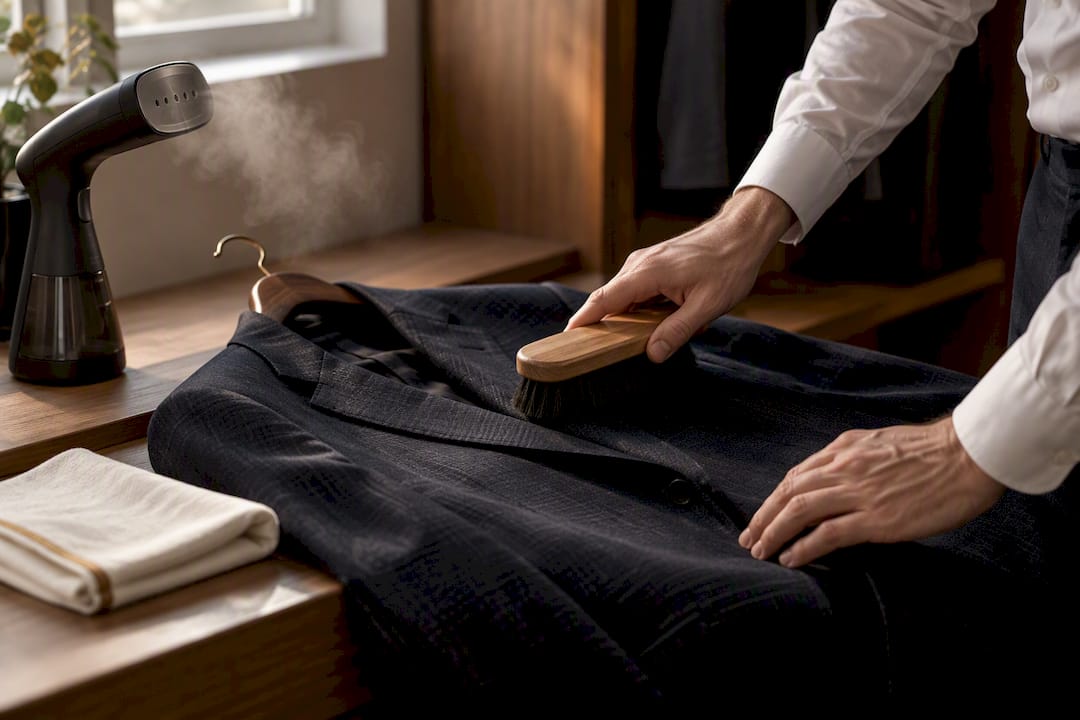
Brush the fabric with a soft clothes brush after each wear to lift dust and surface debris before it settles into the weave. Steam out creases rather than reaching for an iron directly on the cloth. If you must press it, use a pressing cloth between the iron and the fabric, and keep the iron off the lining entirely.
Dry cleaning wears wool down faster than most people realise, so save it for genuine stains or a few times a year at most, and spot clean minor marks with a damp cloth in the meantime. Empty the pockets before storage. Receipts, mints, and event tickets left inside for months distort the pocket lining and pull at the seam.
A suit bought for one ceremony is worth treating as a suit you’ll wear again, at interviews, at weddings, at the next formal occasion that comes along faster than you’d expect after graduation. Suits cared for this way tend to hold their shape for years rather than months, which is precisely the point of investing in a made-to-measure fit in the first place.
What accessories finish a graduation outfit properly?
A tie carries most of the visual weight under a gown, but a handful of smaller accessories separate a good outfit from a considered one. Cufflinks are the most visible of these, since your cuffs peek out from under the gown’s sleeves at almost every angle a camera catches. Simple silver or gunmetal cufflinks work with nearly any shirt and suit combination without competing with the tie.
A pocket square is optional under a gown, since the jacket’s breast pocket is often hidden, but if your gown is open at the front or you’re removing it for the reception, a plain white or subtly patterned square adds a finished look for minimal effort.
A belt matters more for comfort and consistency than for show. Match it to your shoe colour, black with black, and keep the buckle understated rather than branded or oversized.
A watch is one of the few accessories that stays visible throughout, since it sits on the wrist below the gown’s sleeve. A slim dress watch with a leather or metal strap suits formal dress far better than a sports or smart watch, which tends to look out of place against tailoring.
None of these need to be expensive to work. Consistency between metals (all silver-tone or all gold-tone) matters more than the price tag on any single piece.
Considered dressing for the day that actually matters
Confidence on graduation day rarely comes from the newest suit in the room. It comes from a garment that fits so well you stop thinking about it the moment you walk up for your photograph. That’s the standard every made-to-measure piece is built around, because a milestone photograph deserves better than a jacket borrowed for the occasion. Plan the fitting early, and the rest of the day takes care of itself.
— Tajmilkha
Ready to order your graduation suit and tie?
If you’ve settled on the look, the simplest route is straight through to the pieces themselves. The Four-Piece Tailored Suit is the made-to-measure option built for exactly this kind of milestone dressing, cut to your own measurements rather than adjusted from a standard size, which is the real advantage over buying off-the-peg and hoping alterations close the gap. Browse the full suits collection if you want to compare styles before committing.
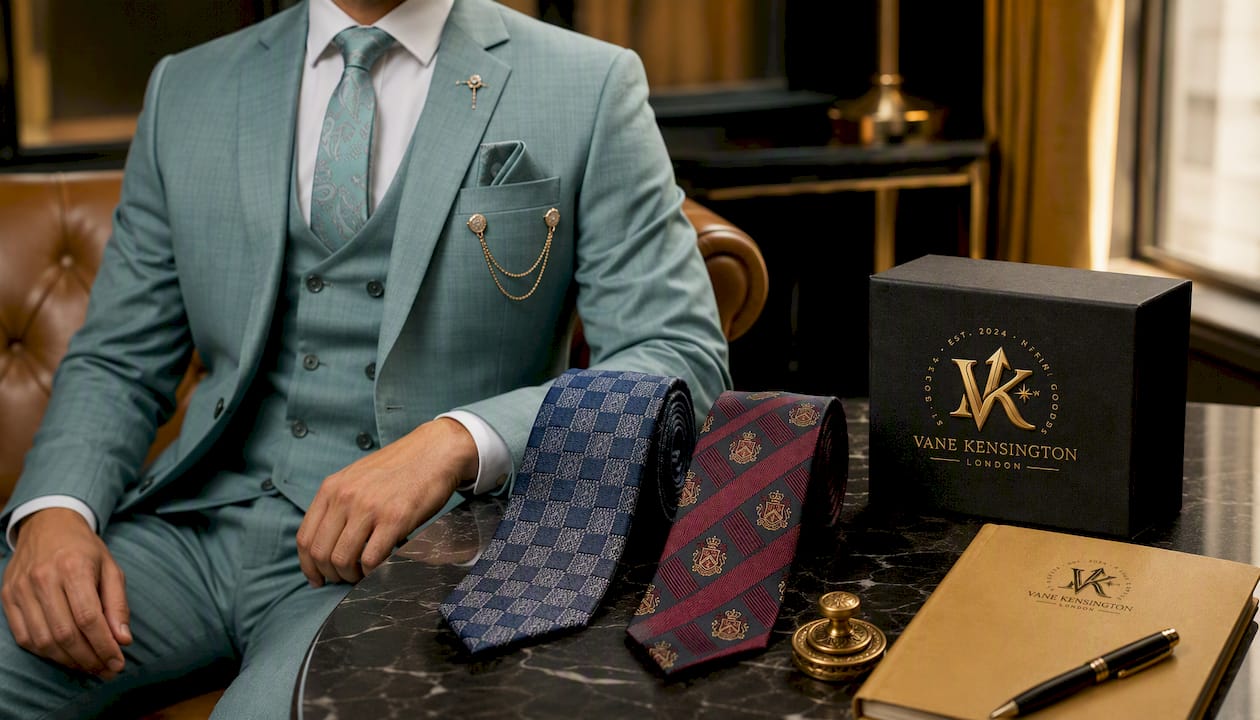
For ready-to-wear pairings, The Regent Silver Geometric Tie and the Crested Regimental Charcoal & Crimson Tie both ship without the lead time a made-to-measure suit needs, so they’re worth ordering first if your ceremony date is close. The wider ties collection has further options if neither is quite the shade you need.
Made-to-measure suits need a true fitting followed by several weeks of hand finishing, so the earlier you book, the more breathing room you have before the ceremony. Get in touch to arrange a fitting, or browse the suits collection online to start narrowing down your shape and cloth.
Sources
-
What to Wear to Graduation for Men: Sharp Style Under a Cap and Gown
-
Graduation outfits for men: what to wear under the gown (and after)
FAQ
What is a graduation suit called?
There’s no separate name for it. A graduation suit is simply a formal or business suit, most often navy or charcoal, worn under an academic gown for a degree ceremony.
What should a man wear to graduation?
A navy or charcoal suit, white or pale shirt, tie if the dress code calls for it, and polished black shoes make the safest and most photogenic combination. Business-formal dress codes typically expect a full suit and tie, while business-casual codes often make the tie optional.
Is it normal to wear a suit to graduation?
Yes, a suit is the standard choice for graduates at university-level ceremonies, since it photographs well under a gown and suits the formality of the occasion. For more relaxed or school-level ceremonies, a blazer and chinos can work instead.
What should men wear to graduation as a guest?
Guests can dress slightly less formally than the graduate, but a suit or a smart blazer with tailored trousers remains the safest choice for family photographs. A tie is a nice addition rather than a requirement for most guests.
How much does a made-to-measure graduation suit cost?
Vane Kensington’s made-to-measure suits, including The Four-Piece Tailored Suit, have current pricing listed on the suits collection page rather than a fixed published rate, since cloth and finishing options vary.