

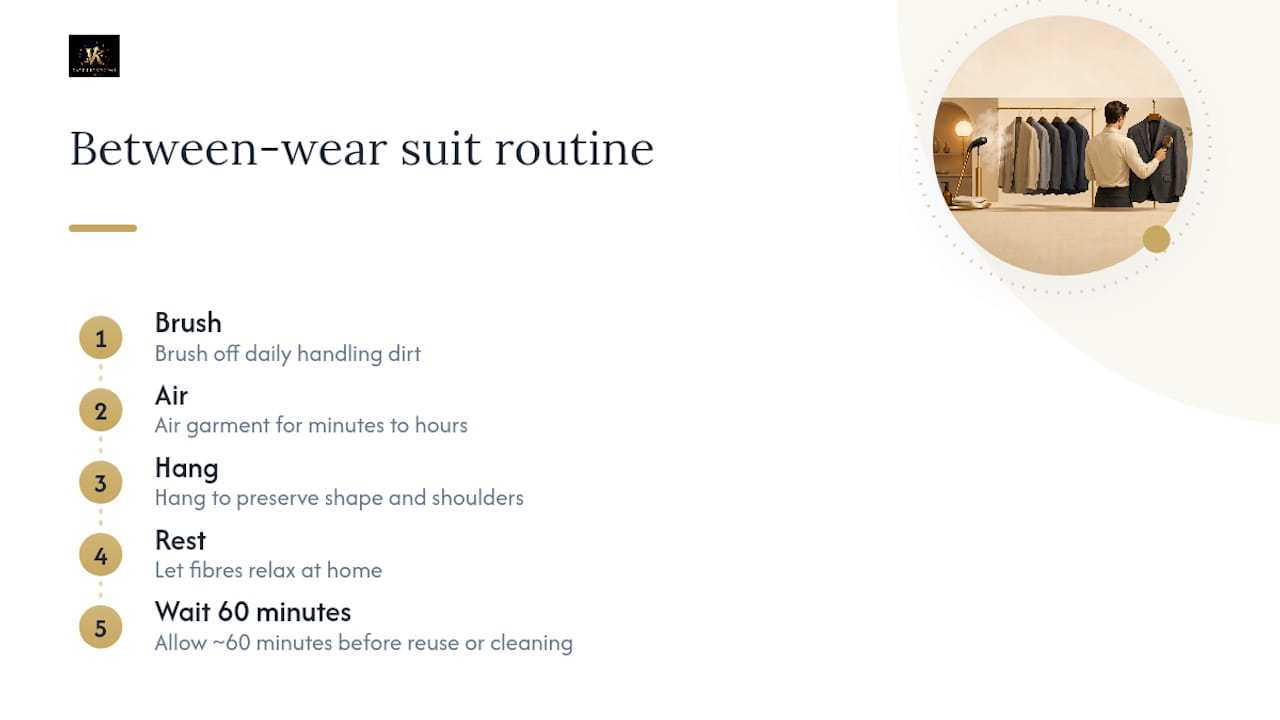
The moment you take a suit off, brush it, empty the pockets, and hang it on a proper shaped hanger before it goes anywhere near a wardrobe. Give it some airing in a ventilated room, then let it rest for at least a day before you wear it again. The International Wool Textile Organisation is clear that brushing and airing, not dry cleaning, should be your default. Save the cleaner for stains, sweat, or every few months of regular wear.
TL;DR:
- Regular brushing, airing, hanging, and resting after each wear can extend a suit's lifespan and reduce the frequency of dry cleaning.
- Use wide, contoured wooden hangers and proper trouser bars to maintain the suit’s shape and prevent shoulder collapse or unwanted creases.
- Steam is preferable to ironing for at-home suit care, as it relaxes fibers without applying direct heat that can damage the fabric.
- Suits should typically be dry cleaned every 3 to 6 wears, or when visible stains, odours, or heavy sweat marks appear, rather than on a fixed schedule.
- Accessories like ties and pocket squares require gentle handling and proper storage, including untying ties fully and giving them time to recover shape before reuse.
Table of Contents
- What is suit care between wears, exactly?
- Your daily between-wears checklist
- How should you hang and store a suit properly?
- Should you steam or iron a suit at home?
- How often should you actually rewear a suit?
- How often should you dry clean a suit?
- What's the best way to treat a fresh stain?
- Does the fabric change how you should care for it?
- What tools actually belong in your suit care kit?
- Where made-to-measure suits need extra care
- Don't forget your ties and pocket squares
- Why routine beats every quick fix
- Ready for a suit worth caring for properly?
- Sources
- FAQ
What is suit care between wears, exactly?
Suit care between wears means the small habits you carry out in the minutes and hours after taking a suit off, not the occasional trip to the dry cleaner. It is the brushing, the airing, the hanging, and the resting that happen at home, largely unnoticed, that decide whether a suit still holds its shape in five years or looks tired after five months.
Most men treat their suit as fine until it visibly needs attention. That is backwards. Wool fibres respond to daily handling long before any stain appears, and the routine you follow in those first sixty minutes off your back does more for longevity than any professional press ever will. Get this right and you will dry clean less, iron less, and replace your suits far less often.
Your daily between-wears checklist
This takes about five minutes and should happen every single time you take the jacket and trousers off.
- Empty every pocket and check for pens, receipts, or anything that could mark the lining.
- Brush the jacket first, working in gentle, downward strokes with a natural-bristle brush, following the nap of the cloth.
- Brush the trousers the same way, paying attention to the seat and knees where dust settles.
- Hang the jacket on a wide, contoured hanger that fills the shoulders properly, and fasten the top button to help the silhouette hold.
- Hang the trousers over a trouser bar rather than folding them over a hanger rail, which creates unwanted creases.
- Air the whole suit somewhere ventilated, ideally away from direct sunlight, for at least 30 to 60 minutes before it goes back in the wardrobe.
- Steam briefly if you spot creasing, holding the nozzle a few centimetres from the cloth in slow, even passes rather than pressing down.
Pro Tip: Brushing takes roughly a minute per suit, which is nothing against the time you save avoiding an extra dry clean. Do it the moment the jacket comes off, before dust has a chance to settle into the weave.
How should you hang and store a suit properly?
A suit's shape lives or dies on its hanger. A wire hanger or a narrow wooden one collapses the shoulder line within weeks, and no amount of pressing brings that back.
- Use a wide, contoured wooden or moulded hanger that matches your shoulder width, never anything narrower.
- Hang trousers on a proper trouser bar to preserve the crease, or fold them along the original seam if space is tight.
- In a small wardrobe, leave at least a hand's width between each suit so air can circulate and shoulders don't get crushed.
- Reach for a breathable garment bag for travel or dust protection, but avoid sealed plastic for anything beyond a short trip. Trapped moisture inside plastic can damage fibres and, over time, attract pests.
- For off-season storage, add cedar blocks or lavender sachets rather than mothballs, and check on stored suits every few weeks.
Should you steam or iron a suit at home?
Steam, don't iron. Steaming relaxes the fibres and lifts odour without applying direct heat, which is exactly why tailoring guides favour it over a hot iron pressed straight onto the cloth.
- Hold the steamer roughly 2 to 3cm from the fabric and work in slow, vertical passes rather than lingering in one spot.
- Let the suit hang and dry naturally afterwards rather than wearing it straight away.
- Leave structured elements, sharp trouser creases, shoulder shape, and lapel roll to a professional press, since these need equipment a handheld steamer can't replicate.
- If ironing is genuinely unavoidable, always use a press cloth and the lowest heat setting your fabric allows.
How often should you actually rewear a suit?
Give a suit at least a day off before it goes back on, and ideally longer if your wardrobe allows it. Wool fibres need that window to recover their natural spring, and skipping it is one of the fastest ways to flatten a good cloth.
- If you wear a suit most days, rotate between at least three, ideally four or five, so each gets proper rest between outings.
- Occasional wearers, think weddings or the odd big meeting, can get away with less rotation but should still air the suit fully before it goes back in the bag.
- Rotation isn't just about looks. Resting a suit properly between wears also reduces how often you need a professional clean, since fibres that recover fully pick up less odour and hold their shape for longer.
How often should you dry clean a suit?
Roughly every 3 to 6 wears covers most regular wearers, according to tailoring industry guidance, while suits worn only occasionally, for events or the odd formal meeting, need cleaning just once or twice a season.
That rule bends the moment you spot a visible stain, heavy sweat marks, smoke odour, or anything that brushing and airing simply won't shift. Clean it immediately rather than letting it sit.
- Visible stains: clean promptly rather than waiting for the next scheduled clean.
- Smoke or strong odour: airing won't fully clear it, so book a clean.
- Heavy sweat, especially underarms: left too long, this weakens fibres and yellows lining.
- Routine wear with no issues: stick to the every-3-to-6-wears rule and lean on brushing in between.
Choose an experienced cleaner who understands suiting, and ask about eco or PERC-free processes where they're available. Always send the jacket and trousers together, even if only one half looks dirty, since cleaning them separately risks a visible mismatch in colour or finish between the two.
What's the best way to treat a fresh stain?
Speed matters more than technique here, but only if you get the technique right too.
- Blot, never rub, using a clean white cloth the second a liquid spill happens. Rubbing pushes it deeper into the weave.
- For oily marks, lift off any excess residue and stop there. Home solvents can strip dye or damage delicate suiting, so leave the actual treatment to a professional.
- Check the seams, buttons, and lining afterwards for any dirt that transferred during the spill.
- When in doubt, bag it and take the suit to a reputable cleaner the same day rather than experimenting overnight.
Does the fabric change how you should care for it?
Yes, and the care label should always win if it contradicts general advice. Wool is genuinely different from other suiting fabrics: it is hygroscopic and naturally odour-resistant, meaning the fibres manage moisture and resist smells well enough that brushing and airing usually cover it. That's the biggest reason wool suits need dry cleaning far less often than people assume.
- Wool: brush and air after every wear; clean sparingly.
- Linen: creases easily and needs more frequent pressing or steaming to stay sharp.
- Cotton and cotton blends: behave somewhere between the two, wrinkling more than wool but tolerating handling reasonably well.
- Cashmere and delicate blends: need gentler brushing, less frequent cleaning, and more careful storage.
When the label on the inside pocket says something different to the general rule, follow the label.
What tools actually belong in your suit care kit?
You don't need much, but the few things worth buying make a real difference.
- A natural-bristle brush, boar or horsehair, which lifts dust without dragging or flattening the weave the way synthetic bristles can.
- A handheld garment steamer for quick refreshes between wears, used at a short distance and in slow passes.
- Wide, contoured hangers for jackets and a proper trouser bar, plus a breathable garment bag for travel.
- Small extras: a lint roller for quick touch ups, a stain pen for genuine emergencies, and learning a proper travel fold so a packed suit doesn't crease across the back.
Pro Tip: A decent natural-bristle brush costs less than a single dry clean and will outlast a dozen of them, provided you actually use it every time the jacket comes off.
Where made-to-measure suits need extra care
A hand-finished suit rewards the routine above more than an off-the-rack piece ever will, because every seam and shoulder line was built around your specific measurements. Careful, infrequent cleaning keeps that construction intact for years rather than months. Vanekensington's guide to caring for a made-to-measure wool suit goes deeper into fabric-specific handling, and the brand journal covers material comparisons for readers weighing up cloth options before their next fitting.
Don't forget your ties and pocket squares
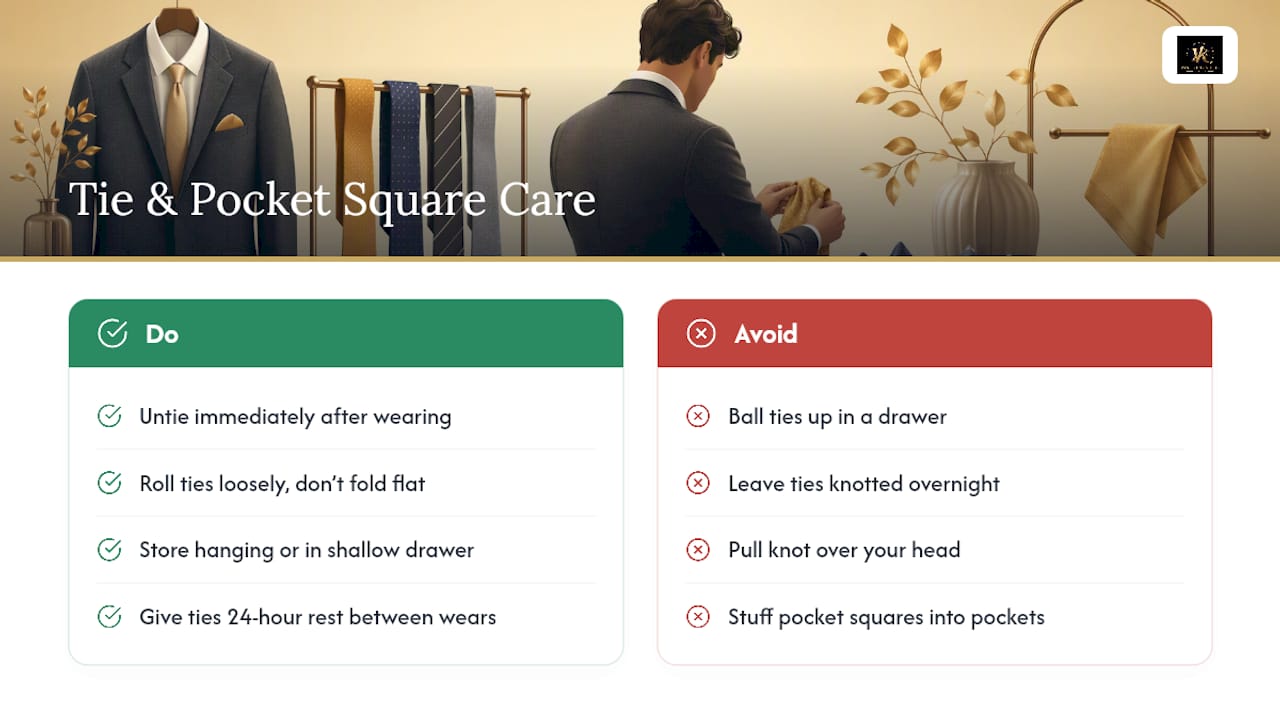
Accessories get treated as an afterthought far too often, and that is exactly why they wear out faster than the suit they're paired with. A silk tie that gets balled up in a drawer or left knotted overnight will develop a crease that no amount of steaming fully removes.
Untie your tie the moment you take it off, rather than loosening the knot and pulling it over your head. That single habit avoids the sharp crease that forms right where the knot sits. Roll it loosely, don't fold it flat, and store it either hanging or in a shallow drawer where nothing else presses down on it. Give a tie the same 24 hour rest you'd give a suit, since silk needs time to recover its shape between wears just as wool does.
Pocket squares are more forgiving but still deserve a proper fold rather than being stuffed in a jacket pocket at the end of the day. A quick reshape and a flat drawer, away from anything that might snag the silk, keeps the edges crisp for the next outing. If a tie or square picks up a stain, resist the urge to treat it yourself. Delicate silk reacts badly to home solvents, and a professional cleaner experienced with fine fabrics will get a far better result than a kitchen-cupboard fix.
Why routine beats every quick fix
Small, consistent habits do more for a suit's lifespan than any expensive treatment ever will. A five-minute brush after every wear outperforms an occasional deep clean, and hand-finished garments repay that attention with years of extra wear.
— Tajmilkha
Ready for a suit worth caring for properly?
None of this routine matters much if the suit underneath was never cut to fit you in the first place. A made-to-measure suit is typically crafted from fine cloth and finished by hand to individual measurements, so the shoulder line and drape are shaped specifically for the wearer's frame, not adjusted from a rack sample. That is the real difference between maintaining a suit that fits and maintaining one that merely does the job.

Browse the made-to-measure suits collection to start a fitting, or pair a new suit with a hand-finished silk tie from pieces like The Mayfair Club Stripe Tie, the Ascot Stirrup Striped Tie, or The Mayfair Navy Diamond Tie, all part of the wider tie collections. For a deeper walkthrough on keeping silk in shape, the guide on how to care for a silk tie covers washing, storage, and stain removal in full.
Sources
- Increase the Life of Your Wool Textiles | IWTO
- How to care for a bespoke suit: cleaning, storage & maintenance guide | The Alex Fashion House
- How often should you dry clean a suit? A tailor's honest answer
- How to look after your suits | Permanent Style
FAQ
Is it okay to wear the same suit two days in a row?
It's best avoided where possible. Wool fibres need roughly 24 to 48 hours to recover their shape after wear, and skipping that rest flattens the fabric faster than normal use alone would.
Is a suit ruined if it gets wet?
No, a light soaking from rain is rarely a problem. Hang the suit on a wide hanger away from direct heat and let it air-dry fully before wearing or storing it again, since damp wool packed away too soon is what actually causes damage.
How many times can you wear a suit between dry cleans?
A sensible guideline is every 3 to 6 wears for regular wearers, or just once or twice a season if you only wear it occasionally. Clean sooner if there's a visible stain, heavy sweat, or smoke odour.
Should you dry clean a new suit before wearing it?
Not usually. A new suit, especially a made-to-measure piece, arrives ready to wear, and dry cleaning too early strips finishing oils and can soften the structure. Brush and air it as normal and save cleaning for when it's genuinely needed.